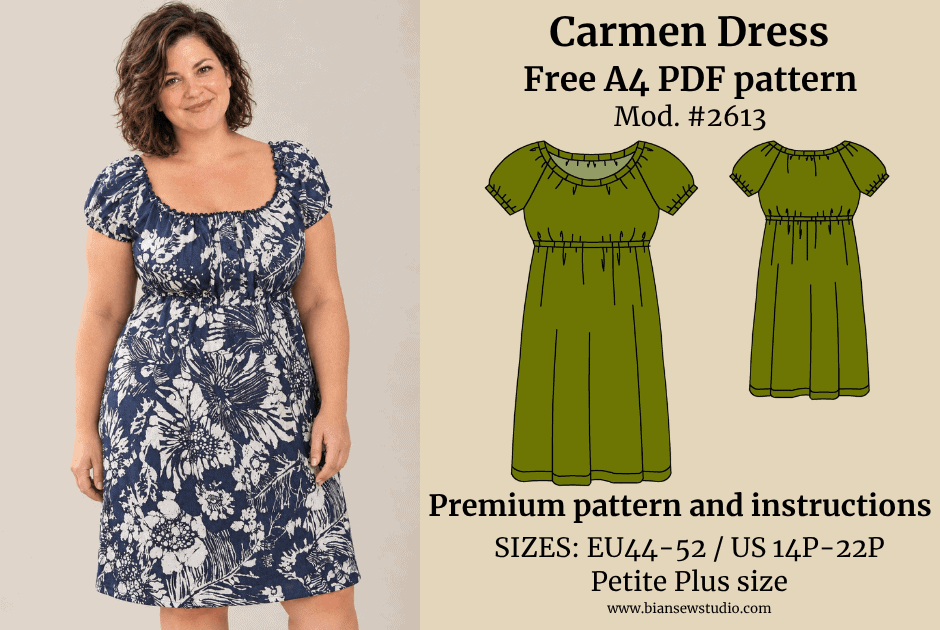
Finding a dress sewing pattern that is designed specifically for a petite plus-size figure can be challenging. The Carmen Dress was created with exactly this in mind: a feminine, easy-to-wear dress designed for petite plus-size women up to 160 cm (5’3″) tall.
Although the Carmen Dress was originally designed as a summer dress, I didn’t want to wait until next year to share it with you. Save the pattern now and you can make your own version when spring arrives.
A Feminine Petite Plus Size Dress
The Carmen Dress has a simple yet feminine silhouette. The knee-length skirt is softly gathered, while the puff sleeves add a playful and romantic touch.
The neckline is elasticated all the way around, giving you the freedom to wear the dress in different ways. Wear it traditionally on the shoulders, or pull the neckline below the shoulders for a beautiful Carmen-style look.
One of the subtle details of this petite dress sewing pattern is the slightly raised waistline. This small adjustment was intentionally designed to create more flattering proportions on a petite plus-size figure, while keeping the dress comfortable and easy to wear.
The result is a simple dress with feminine details that can easily become an everyday favorite.
Petite Plus Size Sewing Pattern – Sizes 44–52
The Carmen Dress sewing pattern is designed specifically for petite plus-size women.
It includes:
- EU 44 (US 14P)
- EU 46 (US 16P)
- EU 48 (US 18P)
- EU 50 (US 20P)
- EU 52 (US 22P)
The pattern is drafted for a height of up to 160 cm (5’3″).
This makes the Carmen Dress a petite plus size sewing pattern rather than simply a standard plus-size pattern shortened in length.
What Fabric Works Best?
The Carmen Dress works beautifully with lightweight woven fabrics. Both solid colors and prints can create lovely results, depending on the look you want to achieve.
A soft floral print can give the dress a romantic, feminine feel, while a solid fabric can create a simple and more understated everyday dress.
The pattern requires approximately 2.20–2.30 m (2.40–2.50 yd) of 145 cm (57″) wide fabric, depending on the size.
Free Petite Dress Sewing Pattern
The free version of the Carmen Dress pattern includes a layered A4 PDF. The layered format allows you to select the size you need before printing, making it easier to work with the pattern and avoid unnecessary lines.
The free pattern will be available through the October 2026 Bian Sew Studio newsletter.
If you enjoy sewing your own clothes and are looking for a petite dress sewing pattern designed for a shorter plus-size figure, this is a great pattern to add to your sewing list.
Premium Carmen Dress Sewing Pattern
For those who prefer additional formats and a more detailed sewing guide, the premium version includes everything you need to cut and sew the dress.
The premium sewing pattern includes:
- layered A4 PDF
- layered A0 PDF
- layered Projector file
- fabric requirements
- cutting list
- fabric layout
- detailed, illustrated step-by-step sewing instructions
- sewing glossary
The pattern includes a 2 cm (3/4″) seam allowance.
The premium Carmen Dress sewing pattern is available in the Bian Sew Studio online shop and Etsy store.
A Petite Dress Designed for Your Height
One of the things I love about creating petite sewing patterns is being able to consider proportions beyond simply shortening a standard pattern.
The Carmen Dress was designed specifically for petite plus-size women, with the proportions of a shorter figure in mind. The slightly raised waistline and overall length are part of that approach.
If you have ever found that standard dress patterns feel too long or that the waist sits in the wrong place, a sewing pattern designed specifically for petite proportions can make a noticeable difference.
Will You Make a Carmen Dress?
I hope you enjoy sewing this simple and feminine petite plus size dress.
If you make the Carmen Dress, I’d love to see your version! Share your finished dress using #biansewstudio so I can see what you created.
Happy sewing! 💛
Bian Sew Studio