There is something magical about handmade toys. A simple piece of fabric can become a little world of imagination, storytelling, and creative play.
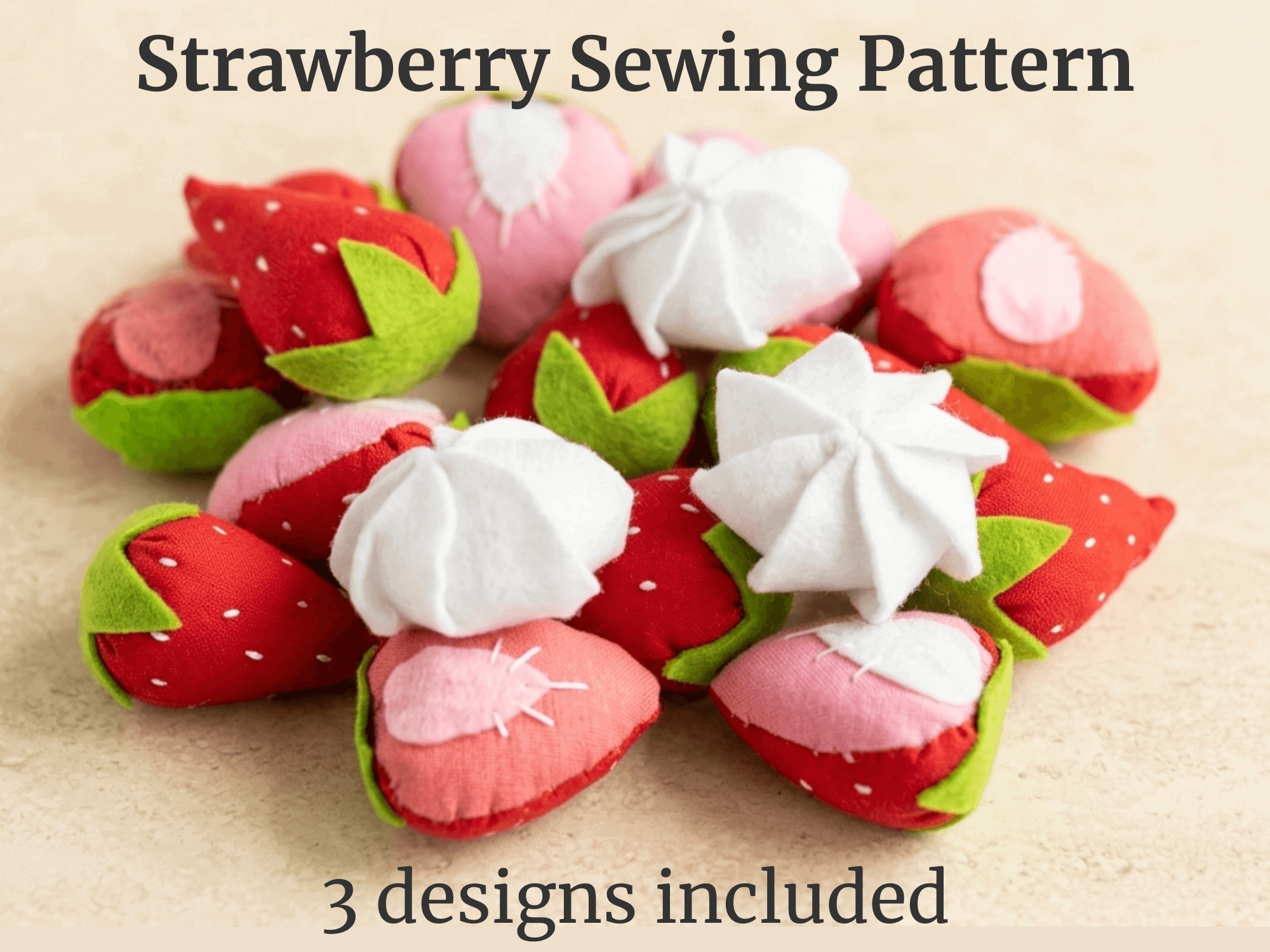
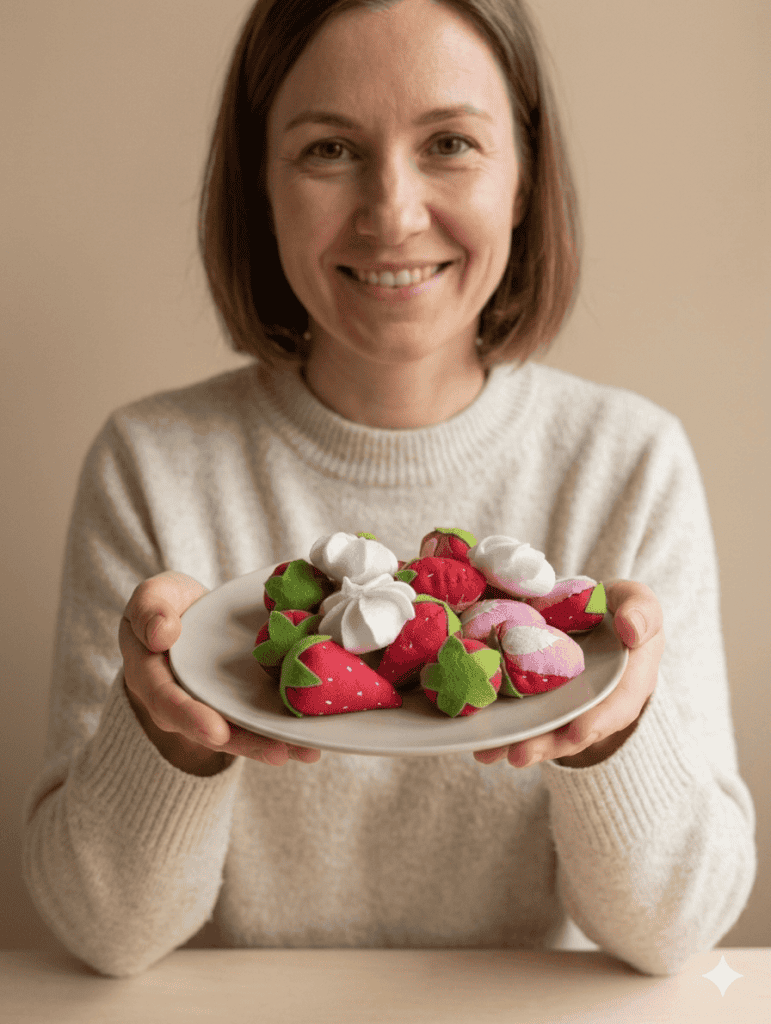
This strawberry salad play food set is a sweet addition to any child’s pretend kitchen. With soft fabric strawberries and a cute whipped cream topping, it is a fun sewing project for anyone who loves creating handmade toys.
This project is part of my handmade play food collection at Bian Sew Studio, designed with a modern, simple style and beginner-friendly techniques.
A Sweet Addition to a Pretend Kitchen
Children love realistic-looking play food because it encourages imaginative play. A small strawberry can become part of a pretend breakfast, a picnic, a toy café, or a cooking game.
Unlike plastic toys, handmade fabric food has a warm, personal feeling. Every piece carries the maker’s creativity and care.
What’s Included in the Strawberry Salad Sewing Pattern?
The premium PDF sewing pattern includes everything you need to create this strawberry play set:
✓ Strawberry pattern piece
✓ Half strawberry pattern piece
✓ Whipped cream pattern piece
✓ Step-by-step illustrated sewing instructions
✓ Printable PDF pattern pieces
The pattern includes separate cutting and sewing lines, and seam allowance is already included.
What You Can Create
With this pattern you can sew:
🍓 Whole strawberries
🍓 Strawberry halves
🍓 Soft whipped cream topping
The finished pieces are small and perfect for building a handmade pretend food collection.
Materials You Need
This project uses simple sewing supplies:
- Cotton fabric in red or pink tones
- Green and white felt
- Embroidery thread
- Fiber fill stuffing
- Hand sewing needle
- Scissors
- Pins
A little textile glue can also be used if preferred.
Beginner-Friendly Sewing Project
This strawberry play food pattern is suitable for beginners.
The estimated sewing time is approximately 30–60 minutes per piece, depending on experience.
The project uses simple techniques such as:
- basic sewing,
- stuffing,
- gathering,
- embroidery details.
The strawberry seeds are created with small decorative stitches, giving each handmade piece a charming realistic touch.
Why Make Handmade Play Food?
Handmade play food is more than just a toy.
It can help children:
- develop imagination,
- practice storytelling,
- learn about everyday objects,
- enjoy creative role play.
It is also a beautiful handmade gift idea for birthdays, holidays, or a new play kitchen.
Create Your Own Fabric Food Collection
This strawberry set is designed to mix and match with other handmade food patterns.
Create your own little fabric kitchen with:
- fruits,
- vegetables,
- desserts,
- bakery items.
Collect your favourite designs and build a unique pretend play world.
Get the Strawberry Salad with Whipped Cream Sewing Pattern
Ready to sew your own sweet strawberry play food?
The complete premium PDF sewing pattern is available in my Etsy shop.
→ Get the Strawberry Salad with Whipped Cream Sewing Pattern on Etsy
Safety Note
This pattern creates a handmade toy intended for gentle play.
If making this toy for young children, make sure all parts are securely attached before use.
Share Your Creation
This pattern creates a handmade toy intended for gentle play.
If making this toy for young children, make sure all parts are securely attached before use.
I’d absolutely love to see what you make! ♡
Please tag your finished garments with @biansewstudio on social media and use the hashtag #biansewstudio so I can admire and share your beautiful creations.
Happy sewing!
Bian Sew Studio