toddler romper handmade
Looking for a simple and beautiful baby romper sewing pattern?
You’re in the right place.
This free version gives you a clean, beginner-friendly base to create a comfortable summer romper for babies and toddlers. And if you want a more detailed, professional experience, there’s also a premium version available.
What You Can Make
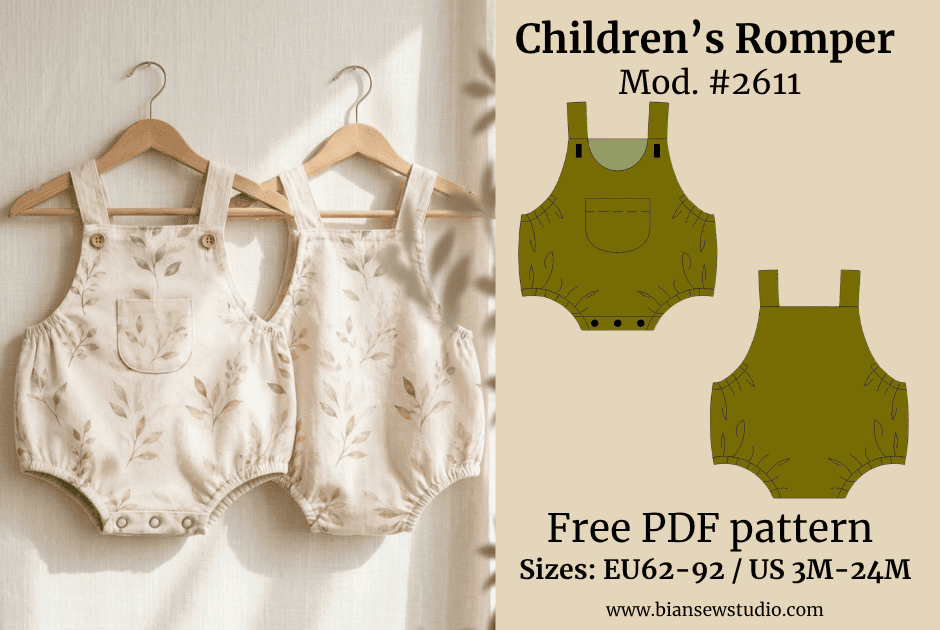
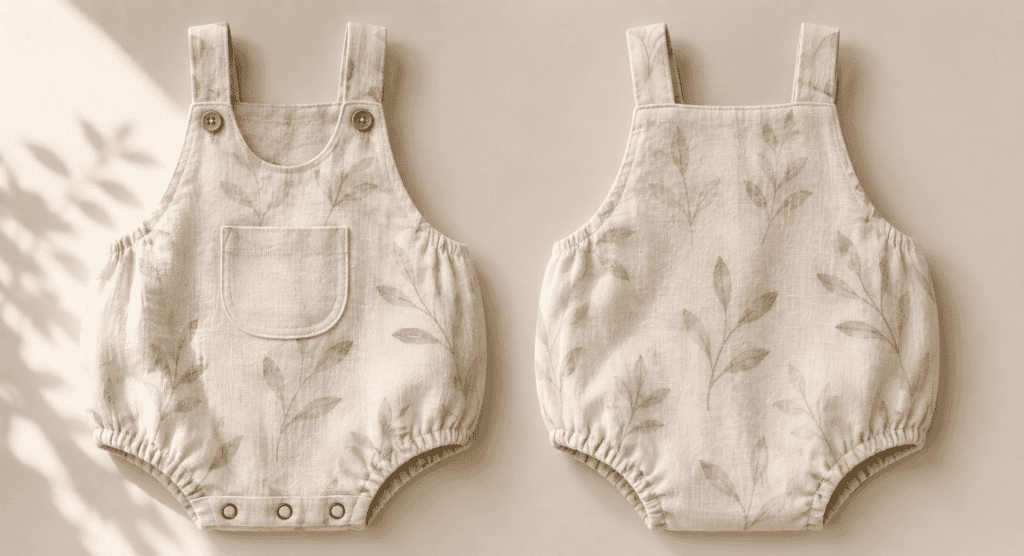
This pattern is a baby bubble romper (sunsuit) with:
- Shoulder straps with button closure
- Soft, rounded bubble shape
- Elastic leg openings
- Snap closure at the bottom
- Cute front pocket
Perfect for warm summer days, everyday wear, or handmade gifts.
Sizes Included
- 3M (62)
- 6M (68)
- 9M (74)
- 12M (80)
- 18M (86)
- 24M (92)
Free Pattern – What’s Included
The free version includes:
- Basic pattern pieces
- Simple construction overview
- Clean, minimal design
👉 This version is perfect if you:
- want to try the pattern first
- like to improvise while sewing
- prefer a lightweight guide
Upgrade to the Premium Pattern
If you want a smoother, more professional sewing experience, the premium version includes everything you need:
- Step-by-step illustrated instructions
- Layered PDF (print only your size)
- A4 + A0 formats
- Projector file
- Seam allowance as a separate layer
- Detailed guidance for a clean finish
👉 Ideal for confident beginners and advanced sewists alike.
Why Choose the Premium Version
- Saves time while sewing
- No guessing — everything is clearly explained
- Perfect results even if you’re not advanced
- Ready-to-use files for any workflow (print or projector)
Recommended Fabrics
For best results, use:
- Linen
- Lightweight cotton
- Cotton lawn
- Viscose
These fabrics create that soft, airy summer look.
Bundle & Save
Planning to sew more?
- Buy 2 patterns → use code SAVE15 for 15% OFF
- Buy 3 patterns → use code SAVE25 for 25% OFF
Perfect if you want to build a full handmade wardrobe.
This romper is one of those timeless pieces you’ll keep coming back to.
Start with the free version, experiment, enjoy the process — and when you’re ready, upgrade to the premium pattern for a smoother sewing experience.
Share Your Creation
I’d absolutely love to see what you make! ♡
Please tag your finished garments with @biansewstudio on social media and use the hashtag #biansewstudio so I can admire and share your beautiful creations.
Happy sewing!
Bian Sew Studio
Download it now and start creating something special!
Difficult level
Model #2611
Mix & Match
Toddler Shirt - #2607 Children Hat - #2608
Sewing Notes
Here are some essential tips for a successful sewing project:
Choosing the Right Size & Fit
- Always choose the size based on your body measurements, not your ready-to-wear size. Check the measurement chart included with the pattern.
- If adjustments are needed, make them before cutting the fabric. Lengthen or shorten the pattern by slashing and spreading or overlapping the pieces, securing with tape.
- For garments, check the ease allowance in the pattern. Some designs include negative ease (smaller than body measurements) for a snug fit, while others have extra room for comfort.
Fabric Recommendations
- Choose a fabric that matches the pattern’s suggested stretch percentage (e.g., 50% stretch means 10 cm fabric should stretch to 15 cm).
- Fabrics with poor recovery (not bouncing back after stretching) can result in wavy seams or a stretched-out garment. To prevent this, select a knit fabric with spandex/Lycra content.
- Preshrink your fabric by washing and drying it the same way you will care for the finished project.
Cutting & Preparation
- Iron your fabric before cutting to remove any creases. Use the correct heat setting based on the fiber content (low heat for synthetics, high heat for natural fibers).
- When placing pattern pieces, ensure the grainline is parallel to the fabric selvage to maintain the correct drape.
- Cut small, precise notches (about 1/8” or 0.3 cm) to avoid weakening the seam allowances.
Sewing & Finishing
- Use a stretch or ballpoint needle for knit fabrics to avoid skipped stitches. If stitches are skipping, try a slightly larger needle size.
- If seams appear wavy, try using a walking foot or adjusting the differential feed on an overlocker.
- Use a stretch stitch or zigzag stitch to maintain flexibility in the seams. If seams crack under stress, check the stitch type and use polyester thread instead of cotton.
- When pressing seams, lift the iron between sections instead of gliding it to prevent stretching out the fabric.
By following these guidelines, you’ll achieve a professional-looking finish and a well-fitting garment or accessory. Happy sewing! 🧵✂️