Free Toddler Pants Sewing Pattern

Easy Baby Pants PDF Pattern

Looking for a quick and adorable sewing project for your little one?

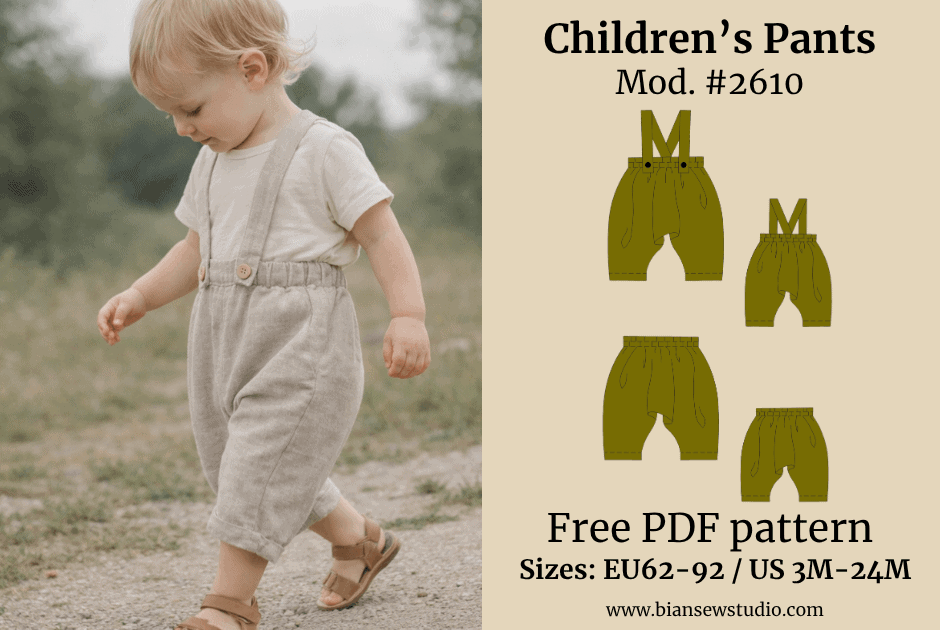
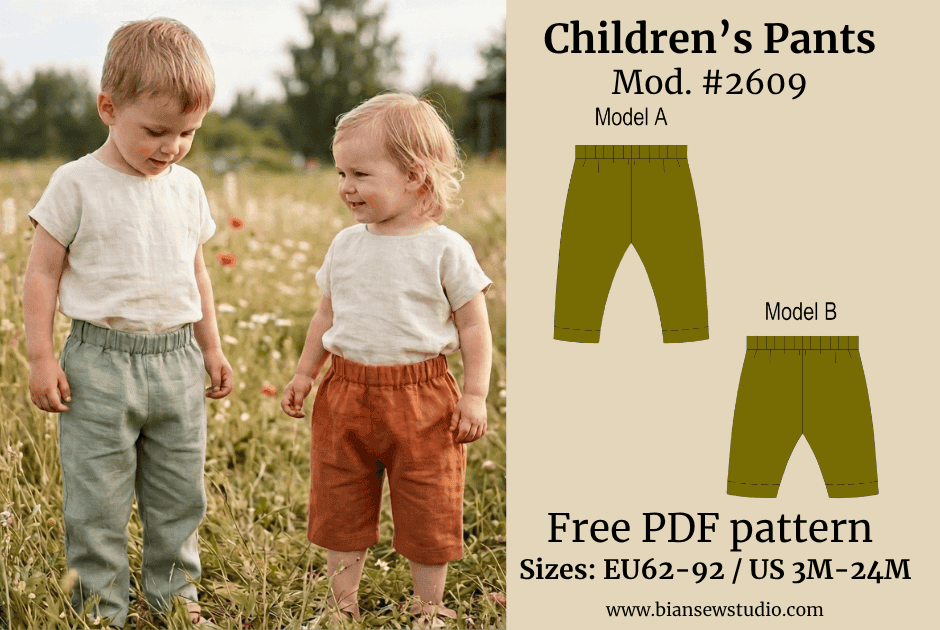
This free toddler pants sewing pattern is the perfect choice for beginners and experienced sewists alike. These comfy baby pants are designed for everyday wear and come in two cute styles:

Simple elastic waist pants
Pants with suspenders

The relaxed fit allows plenty of movement for crawling, playing, and exploring.

Whether you sew them in linen for summer or soft corduroy for cooler days, these little pants will quickly become a wardrobe favorite.

What’s Included in the Free Download

The free version includes:

A4 / Letter printable sewing pattern
Step-by-step illustrated instructions
Layered PDF so you can print only the size you need

This pattern includes sizes:

EU 62 / 68 / 74 / 80 / 86 / 92
US 3M / 6M / 9M / 12M / 18M / 24M

Want More? Get the Premium Version

Upgrade to the premium version for extra convenience:

A4 / Letter file
A0 copy shop file
Projector sewing file
Layered files
Illustrated instructions

Perfect if you prefer projector sewing or large-format printing.

Fabric Recommendations

For warm weather:

  • Linen
  • Lightweight cotton
  • Cotton lawn
  • Viscose

For cooler weather:

  • Cotton twill
  • Soft denim
  • Corduroy
  • Ponte
  • Viscose twill

Materials Needed

Pants with suspenders:

  • Fabric
  • Elastic
  • 2 buttons

Pants without suspenders:

  • Fabric
  • Elastic

You’ll find exact fabric requirements inside the pattern.

Mix & Match with Other Patterns

This pattern is designed to coordinate beautifully with other Bian Sew Studio sewing patterns.

Create a handmade capsule wardrobe by pairing these pants with matching tops, jackets, and blouses from the shop.

Skill Level

Beginner / Confident Beginner

A great project if you want to practice:

  • sewing seams
  • inserting elastic
  • making buttonholes


Share Your Creation

I’d absolutely love to see what you make! ♡

Please tag your finished garments with @biansewstudio on social media and use the hashtag #biansewstudio so I can admire and share your beautiful creations.

Happy sewing!

Bian Sew Studio

Download it now and start creating something special!

Difficult level

Model #2610

Sewing Notes

Here are some essential tips for a successful sewing project:

Choosing the Right Size & Fit

  • Always choose the size based on your body measurements, not your ready-to-wear size. Check the measurement chart included with the pattern.
  • If adjustments are needed, make them before cutting the fabric. Lengthen or shorten the pattern by slashing and spreading or overlapping the pieces, securing with tape.
  • For garments, check the ease allowance in the pattern. Some designs include negative ease (smaller than body measurements) for a snug fit, while others have extra room for comfort.

Fabric Recommendations

  • Choose a fabric that matches the pattern’s suggested stretch percentage (e.g., 50% stretch means 10 cm fabric should stretch to 15 cm).
  • Fabrics with poor recovery (not bouncing back after stretching) can result in wavy seams or a stretched-out garment. To prevent this, select a knit fabric with spandex/Lycra content.
  • Preshrink your fabric by washing and drying it the same way you will care for the finished project.

Cutting & Preparation

  • Iron your fabric before cutting to remove any creases. Use the correct heat setting based on the fiber content (low heat for synthetics, high heat for natural fibers).
  • When placing pattern pieces, ensure the grainline is parallel to the fabric selvage to maintain the correct drape.
  • Cut small, precise notches (about 1/8” or 0.3 cm) to avoid weakening the seam allowances.

Sewing & Finishing

  • Use a stretch or ballpoint needle for knit fabrics to avoid skipped stitches. If stitches are skipping, try a slightly larger needle size.
  • If seams appear wavy, try using a walking foot or adjusting the differential feed on an overlocker.
  • Use a stretch stitch or zigzag stitch to maintain flexibility in the seams. If seams crack under stress, check the stitch type and use polyester thread instead of cotton.
  • When pressing seams, lift the iron between sections instead of gliding it to prevent stretching out the fabric.

By following these guidelines, you’ll achieve a professional-looking finish and a well-fitting garment or accessory. Happy sewing! 🧵✂️

Leave a Reply

Related Articles