Choosing the right sewing pattern is just as important as sewing it well.
Many fit problems start long before you cut your fabric. They begin at the pattern selection stage.
If you’ve ever finished a garment and felt disappointed — even though you chose the “correct” size — the issue may not be your sewing skills. It may be that the pattern was not suited to your body proportions.
In this guide, you’ll learn how to choose a sewing pattern that works with your body shape — not against it.
If you haven’t read my article on why sewing patterns don’t fit even in the right size, start there first → (insert internal link here)
1. Body Type Matters More Than Size
Size is only one part of the equation.
Two people wearing the same bust measurement may have:
Patterns are drafted using a standard block. If your proportions differ from that base, you’ll need adjustments.
Understanding your proportions helps you choose patterns that require fewer modifications.
2. Identify Your Key Proportions
Instead of focusing only on bust-waist-hip numbers, check:
If you need help measuring accurately, read my guide on accurate body measurements for sewing → (insert link to measurement article)
The more precise your measurements, the better your pattern decisions will be.
3. Choosing Patterns for Different Body Types
Let’s look at common proportion differences and what to consider when choosing a sewing pattern.
Petite (Short Torso or Overall Height)
Look for:
-
Higher waistlines
-
Shorter bodice lengths
-
Vertical seam lines
Avoid:
-
Dropped waist designs
-
Excessively long tops
Petite adjustments are usually about length, not width.
Tall or Long Torso
Look for:
You may need consistent length adjustments across patterns.
Full Bust (Compared to Upper Bust)
Look for:
-
Princess seams
-
Darts
-
Structured bodices
Avoid:
Patterns drafted for a B cup may require Full Bust Adjustments (FBA).
Curvy Hips
Look for:
Check the finished hip measurement carefully.
Straight Body Shape
Look for:
-
Structured garments
-
Defined waistlines
-
Peplum styles
-
Belts or waist emphasis
Structure can create shape visually.
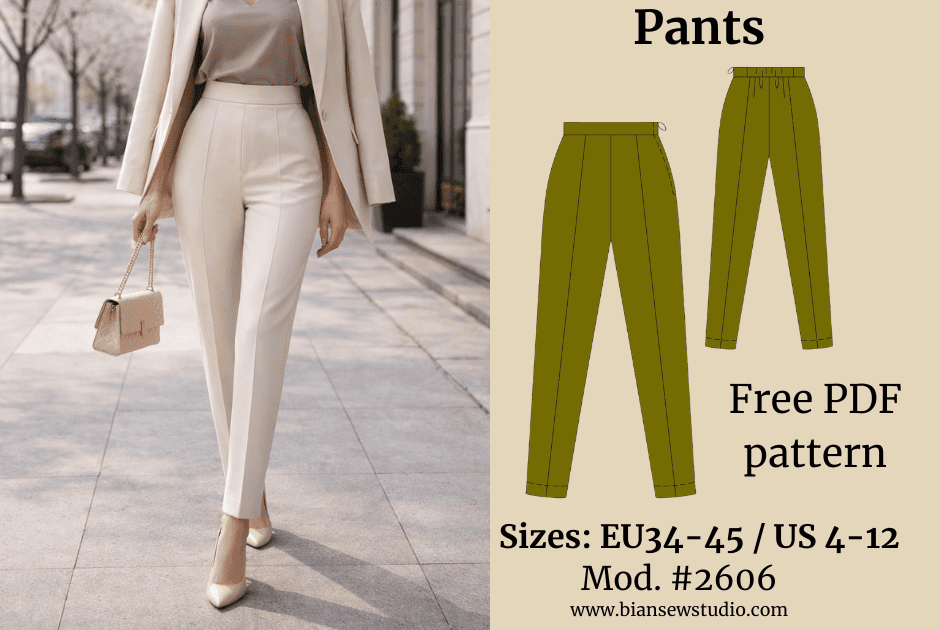
4. Study the Line Drawing — Not the Styled Photo
Styled photos can be misleading.
Always examine the technical line drawing. It shows:
-
Seam placement
-
Dart positioning
-
Ease level
-
Overall silhouette
This is where you truly understand how the garment is constructed.
5. Understand Ease Before You Buy
Ease dramatically affects how a garment fits.
There are two types:
If you’re unsure how ease works, read my detailed explanation here → (insert internal link if you later create an ease article — or link to previous fit article)
Check finished garment measurements whenever available.
6. When to Blend Sizes
You may fall into different sizes at bust, waist, and hips. That is completely normal.
Size blending is often the best solution:
This creates a much more accurate base fit.
7. Final Checklist Before Buying a Pattern
Before purchasing or printing a sewing pattern, ask:
✔ Does this silhouette suit my proportions?
✔ Does it include shaping where I need it?
✔ Are length adjustments marked?
✔ Have I checked finished measurements?
✔ Am I willing to make minor fit adjustments?
Choosing wisely saves time, fabric, and frustration.
Final Thoughts
The right pattern makes sewing easier.
Instead of trying to force a garment to fit after sewing, choose a pattern that already aligns with your body’s proportions.
Fit is not about changing your body.
It is about understanding it — and selecting patterns accordingly.
And that skill will improve every project you make.