Curve & Bloom Collection - Cherry Swing Dress
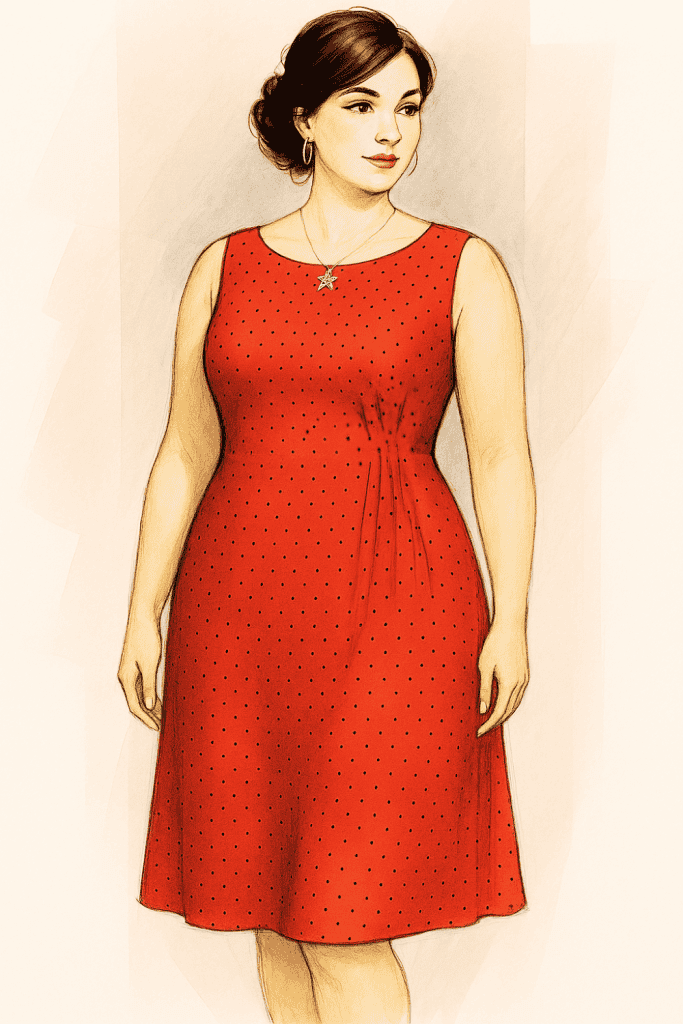
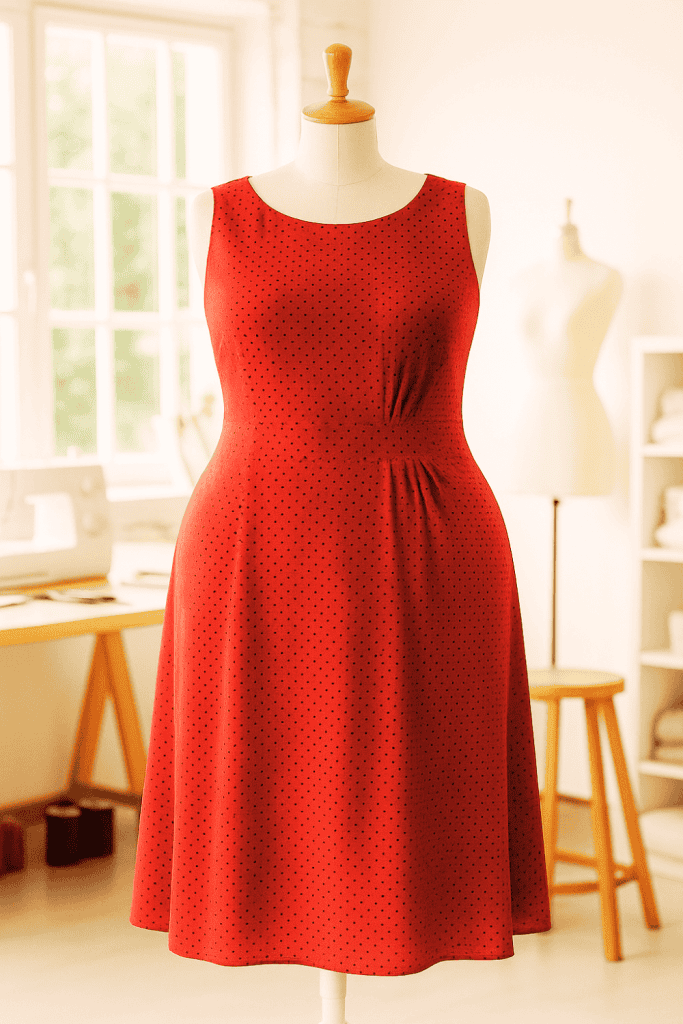
Looking for a dress that’s just as unique as you are? This asymmetric plus size dress pattern is designed to celebrate curves with style and confidence. One side of the dress is sleek and minimal, while the other adds dynamic volume – almost like merging two dresses into one. The result? A bold yet wearable statement piece that flatters every angle.
The wide neckline beautifully frames your collarbone and adds a soft, elegant touch to the design. On the left side, a gentle gather subtly highlights the waist without clinging – making it comfortable and flattering for many body shapes.
✂️ Sewing difficulty: Learning
This pattern is great for adventurous beginners who already have some basic sewing experience and are ready to try light asymmetry and gathering.
👗 Styling Tip:
Sew it in a fluid, solid-colored jersey or stretch silk to turn it into a stunning winter cocktail dress. Pair it with heeled ankle boots and a sleek clutch for an effortlessly chic evening look.
Whether you’re dressing up for a holiday party or just want something special for your wardrobe, this dress lets your creativity shine.
📥 Ready to sew?
Don’t miss out – the pattern is totally free! Grab your fabric, download the PDF, and start sewing your dream summer dress today. ✂️💕
Download it now and start creating something special!
And if you sew it, please share it with me! 📸 Tag me on Instagram: @biansewstudio 📌 Use hashtags: #lilybreeze-dress #biansewstudio
Sewing Notes
Here are some essential tips for a successful sewing project:
Choosing the Right Size & Fit
- Always choose the size based on your body measurements, not your ready-to-wear size. Check the measurement chart included with the pattern.
- If adjustments are needed, make them before cutting the fabric. Lengthen or shorten the pattern by slashing and spreading or overlapping the pieces, securing with tape.
- For garments, check the ease allowance in the pattern. Some designs include negative ease (smaller than body measurements) for a snug fit, while others have extra room for comfort.
Fabric Recommendations
- Choose a fabric that matches the pattern’s suggested stretch percentage (e.g., 50% stretch means 10 cm fabric should stretch to 15 cm).
- Fabrics with poor recovery (not bouncing back after stretching) can result in wavy seams or a stretched-out garment. To prevent this, select a knit fabric with spandex/Lycra content.
- Preshrink your fabric by washing and drying it the same way you will care for the finished project.
Cutting & Preparation
- Iron your fabric before cutting to remove any creases. Use the correct heat setting based on the fiber content (low heat for synthetics, high heat for natural fibers).
- When placing pattern pieces, ensure the grainline is parallel to the fabric selvage to maintain the correct drape.
- Cut small, precise notches (about 1/8” or 0.3 cm) to avoid weakening the seam allowances.
Sewing & Finishing
- Use a stretch or ballpoint needle for knit fabrics to avoid skipped stitches. If stitches are skipping, try a slightly larger needle size.
- If seams appear wavy, try using a walking foot or adjusting the differential feed on an overlocker.
- Use a stretch stitch or zigzag stitch to maintain flexibility in the seams. If seams crack under stress, check the stitch type and use polyester thread instead of cotton.
- When pressing seams, lift the iron between sections instead of gliding it to prevent stretching out the fabric.
By following these guidelines, you’ll achieve a professional-looking finish and a well-fitting garment or accessory. Happy sewing! 🧵✂️


This Post Has 6 Comments
thx
thx
lovely
thx
Thx!!!
thank you!